
The island of Graciosa or the “white island” is one of the five islands that form the central group of the Azores archipelago and is known for being the diving capital of the Azores, as well as for its wonderful queijadas.
It is classified by UNESCO as a World Biosphere Reserve. Its name “white island” comes from its geomorphologic characteristics and also from its toponymy: Pedras Brancas, Serra Branca and Barro Branco (places on the island with the white name). The island has only one county, Santa Cruz da Graciosa, made up of 4 parishes and all of them have places that you should certainly visit.
In this article, we will present some of the places that you must visit in your visit to the island of Graciosa.
Caldeira da Graciosa
This is one of the most emblematic places on the island and corresponds to an oval volcanic depression that is located in the southeast area of the island (Furna do Enxofre is integrated into this place). It is 270 meters deep and is located at the top of Caldeira volcano, the smallest in the Azores. In addition, this area is the second largest forested area on the island.

Furna do Enxofre
Furna do Enxofre is one of the ex-libris of the island of Graciosa and is located in the southeast area of the island. This is an important lava cave of great international interest. Its main feature is its perfect vaulted ceiling and the fact that it is accessed through a tower, built in 1939, with a snail staircase of about 183 steps. The tower is approximately 37 metres high and inside the furnace there is a cold water lake and a fumarola with mud, from where sulphurous gases emanate.

Caldeirinha
Caldeirinha, also known as Algar dos Diabretes, corresponds to the only volcanic algar on this island and is about 37 metres deep. It is possible to walk around its crater and enjoy the various natural perspectives that it presents. The landscape is made up of 55 cones of slag of volcanic origin and is one of the most important geosites of the entire archipelago. From its highest point, it is possible to see the islands of Terceira, São Jorge, Pico and Faial in a panoramic way.

Ilhéu de Baixo
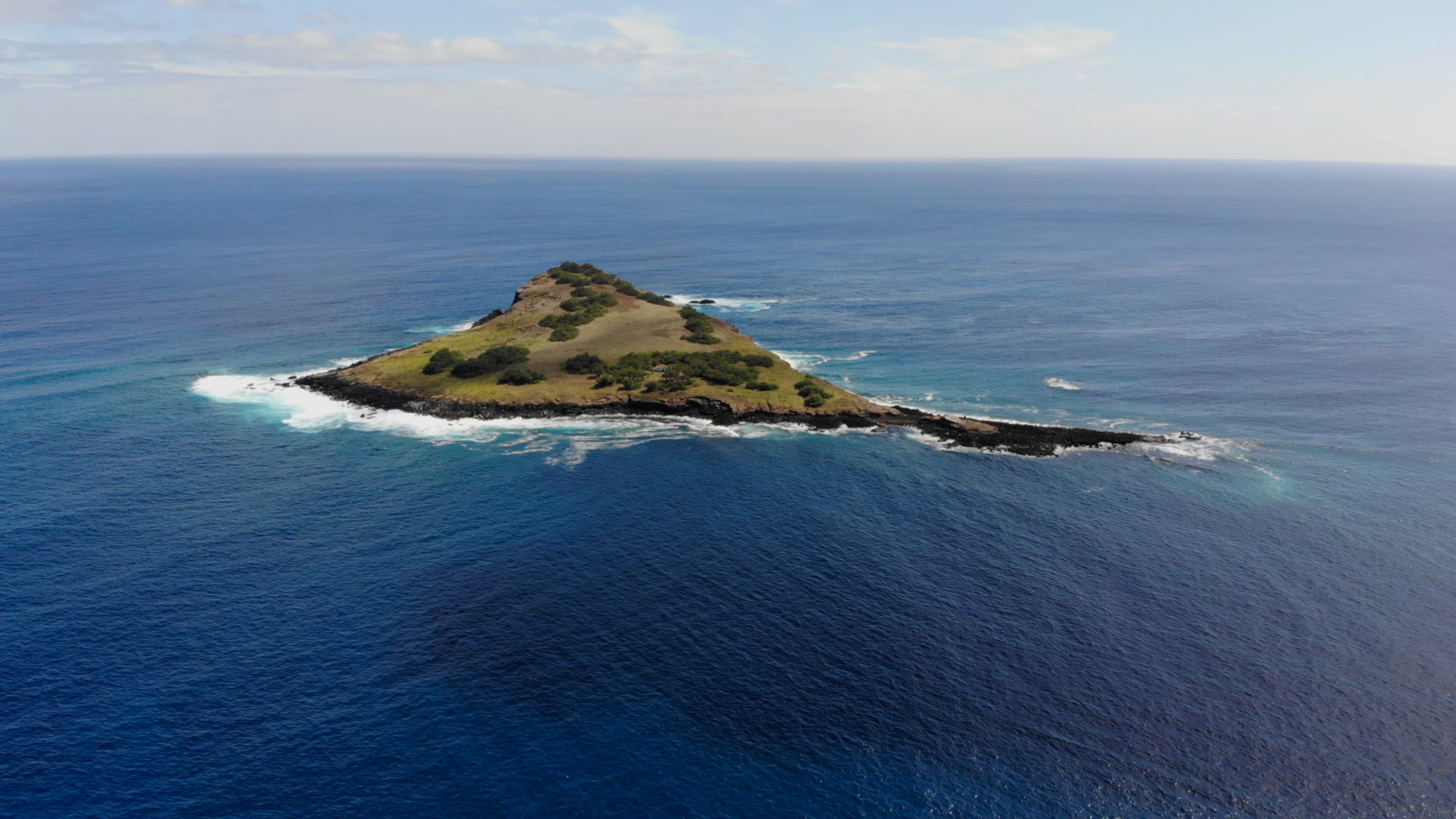
This islet is home to important coastal endemic plant communities on its cliffs and surface and is also an important place of shelter for the seabirds that abound on the island.

Ilhéu da Praia
The islet of Praia is home to a rich community of seabirds and is even considered one of the most important islets in the Azores. It is the only place in the world where you can find the Paínho-de-Monteiro (Monteiroi hydrobates), the smallest endemic marine bird in the Azores.
Ilhéu da Baleia
It is a rock formation of volcanic origin located in the bay of Ponta da Barca (you can also visit its lighthouse).
This is a protected area due to its landscape. It has a reddish colour and its shape resembles a whale. It is from its shape that its name is born.

Pico Timão and Pico do Facho
This is the emitter centre of the last eruption that occurred on the island. Pico Timão has 398 meters and Pico do Facho has 375 meters of altitude. They are full of endemic vegetation which makes them very suitable places.

Monte da Nossa Senhora da Ajuda
This is a hill that provides a pleasant panoramic view of the village of Santa Cruz, in the northern part of the island. In addition, this hill provides a visit to three hermitages of great value, dedicated to São João, São Salvador and Nossa Senhora da Ajuda.

Termas do Carapacho
This is a spa, located in the area of Carapacho, near the sea at the foot of the highest volcanic elevation on the island. It contains a natural thermal pool that is very sought after for its therapeutic characteristics and is one of the most sought after places on the island.

Graciosa Museum
The Graciosa Museum is located in an old bulk (deposit or storage associated with the production of cereals and wine). On the first floor, it presents the appearance of a typical Graciosa house. On the ground floor, you can still see the winery, with its presses and agricultural implements. Besides this nucleus, the Graciosa Museum also presents two more nuclei: one of the Barraca das Canoas and one of the places of the Fountains. In the first one, you can see the whaling canoes and the utensils of this Azorean art and in the second one, you can visit a windmill, also very related with the good economic art of the Azores.