The island of Santa Maria is known as having been born twice. About eight million years ago the small island of Santa Maria was formed from a volcano in the marine depths but disappeared into the waters. After a violent erosion, the land was completely submerged again and at that time a thick layer of marine sediment accumulated. Subsequently, there were several eruptions that caused the reappearance of the island at the surface.
Santa Maria is the oldest island in the Azores Archipelago and, moreover, it has been the longest without volcanic activity for about two million years, which is why it is the only island with calcareous rocks where marine fossils are hidden, which are the real treasures for palaeontologists, geologists, and biologists who identify, date, and catalogue them. Several marine organisms such as molluscs, crustaceans, corals, cetaceans, seaweeds lived on the island in different eras and ended up being transformed into stone animals, being scattered throughout the 20 deposits of Santa Maria, such as the Pedra-Que-Pica, which was formed approximately five million years ago.
The truth is that the Santa Maria fossils have acquired international relevance in the area of Paleontology due to researchers from the University of the Azores, more specifically from the foundation, in 2002, of a research group based in the Department of Biology – MPB – Marine PalaeoBiogeography working group. It is also a tourist attraction of the island and it is important, in a visit to Santa Maria, to get to know those fossils that make the history of the island so peculiar.
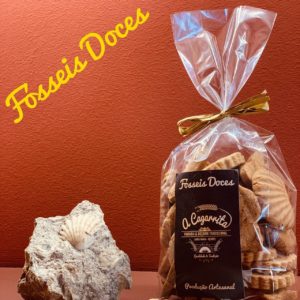
The famous fossils of Santa Maria then gave rise to the regional sweets in the form of fossils: the shell, the conch, the shark’s tooth and some round cookies that imitate the fossils with shells. The project was created by the pastry shop “A Cagarrita”, with Rosa Cabral as its owner, who was not afraid to put into practice a project that had been on the drawing board for a long time. Tourists already look for these products in their trips to Santa Maria as a way to take a souvenir of the island’s fossils.