
At the Quinta do Agricultor, Mrs Gorete Massa and Mr Eugénio will open the doors to a true Azorean experience, letting visitors know in an authentic way how their ancestors lived in São Miguel Island.
The visit starts next to the parking area. The farm has 4 acres of land and everything planted there is only 3 years old.

Mr Eugénio is in charge of grouping people together and also of being the guide for this fantastic experience. Until we reach the house of the Farmer’s Farm, the visit extends along the access path, where various species of plants, flowers and fruit are planted.
As we walk through the canada, Mr Eugénio tells us about some of the customs of life in the past, as well as explaining the times of the year when certain species are planted, their properties and benefits and even their history. The canada has various side entrances, both on the left and the right side, and visitors are invited to enter these various entrances, which give way to various plantations of the most varied species.
It is certainly captivating to listen to Mr Eugénio speak. Every word he speaks is said with gusto, he is a true talking encyclopedia. In addition to his knowledge, he makes people feel at ease and an integral part of the farm, and all the plants and fruits that we find along the way we try and smell.
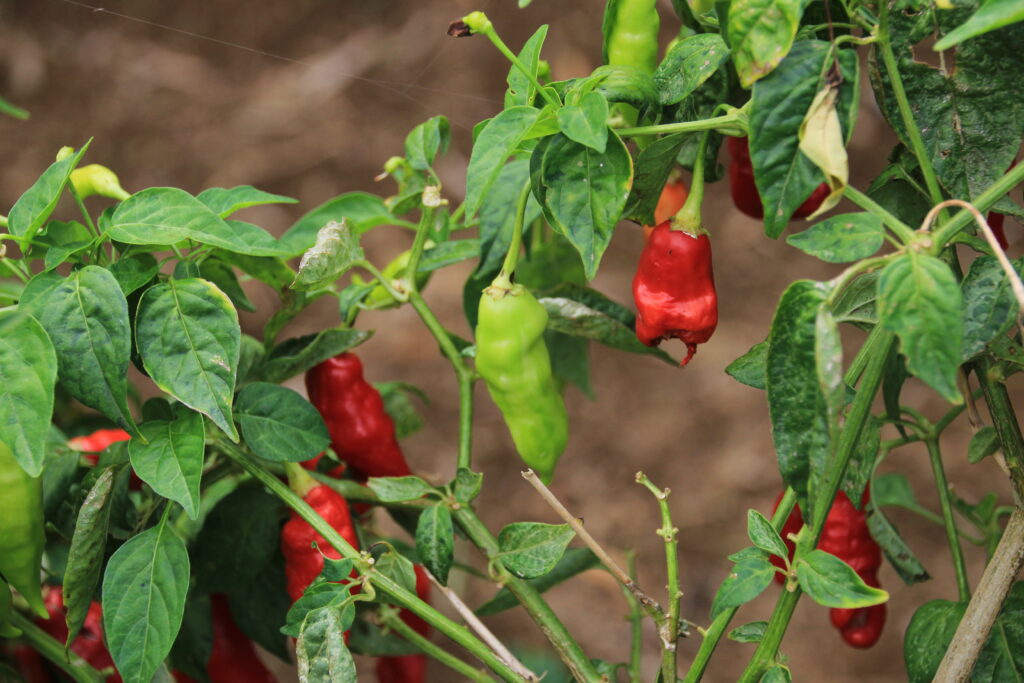
Among the various plantations at the Farmer’s Farm, we find cultivated lupins, chillies, peppercorns, nêveda, melon root pear, peanuts, capuchins, passion fruit, banana, bananas, sugar cane, camellias, strawberries, corn, azaleas, sunflowers, araçá and pennyroyal.



In Mr Eugénio’s various explanations, there are some very interesting aspects. The camellia is an ornamental plant and also a tea plant. It’s a plant that seeks the coldest times to flower.
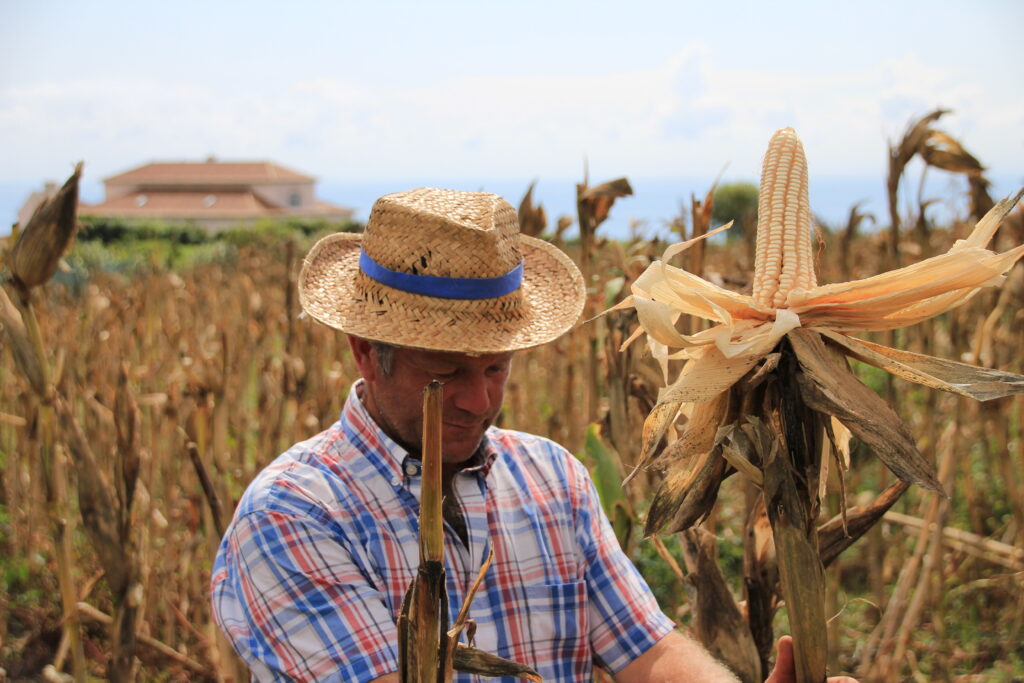
The maize, which was the basis for feeding animals and people, and also the fact that it was a plant for survival. As Mr Eugénio says, it is one of the most intelligent plants in the world, even in adverse conditions maize concentrates all its energy to produce maize kernels, that is, if a maize plant is large and has little food, it will automatically reduce its size to concentrate its energy on the germination of the cob.
Before we get to the next stage of the visit, we enter the farm’s banana plantation, where we are invited to taste the Azores banana. This has been considered the best banana in the world due to the fact that it is the least calorific, the sweetest and the most nutritious. Here we also learn that the banana tree is a family plant, each banana tree takes 2 years to bear fruit and each bunch of bananas produces an average of 120 to 140 bananas.
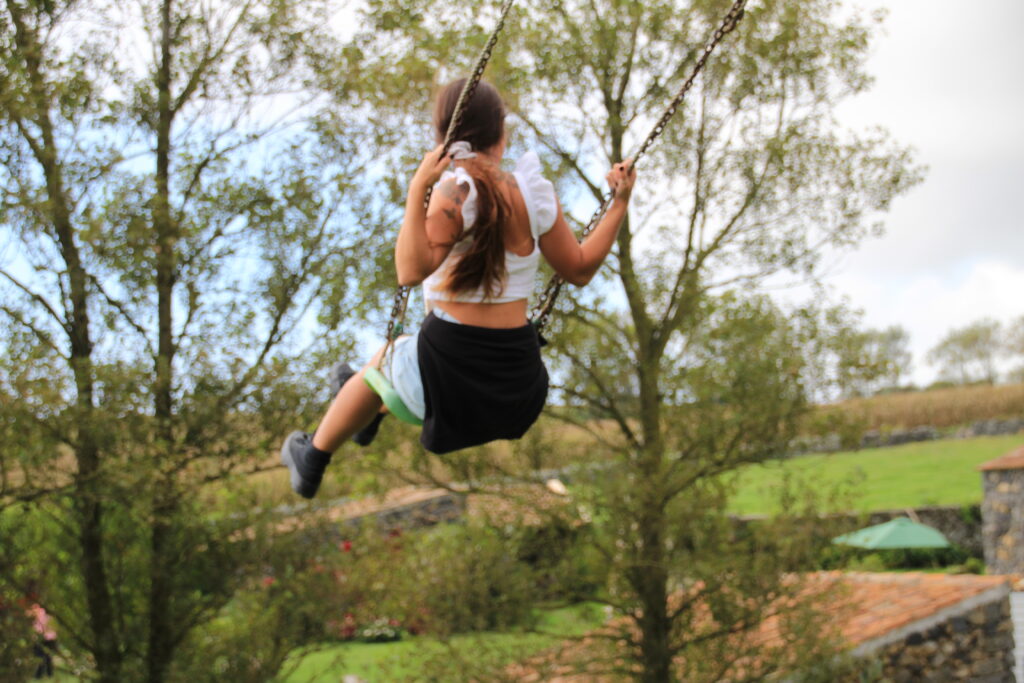
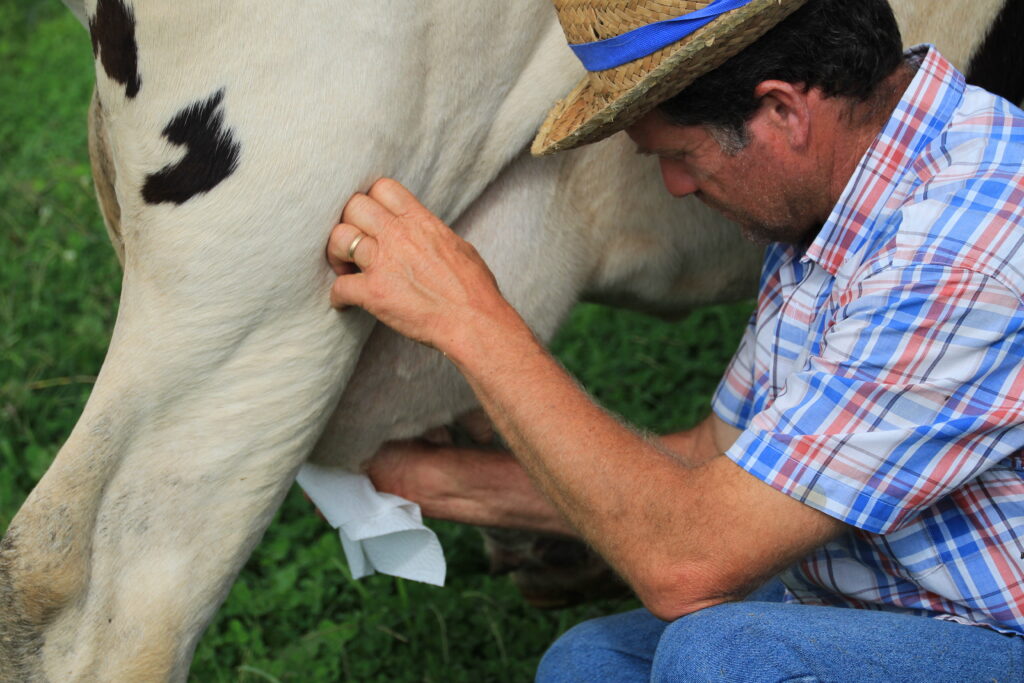
After tasting the banana from the Azores, it was time for a unique experience, milking a cow and drinking its milk on the spot. But a unique experience never comes alone. In the middle of the milking pasture, there is a giant swing made by the owners. The swing is situated in the highest part of the pasture, just before the uneven ground, which makes you very high up when you are launched. It’s an adrenaline rush that everyone should experience.


Next, after this injection of adrenaline and chills in the belly, it’s time to meet the farm. Redundancy aside, it is not the farm itself, but the milking cow that is called Quinta (can mean “farm” or “fifth/five”) because she was born with 5 teats, which is actually a unique case, as cows usually have 4 teats.
Mr Eugénio, with the help of his employees, put a bucket of feed for the cow to eat and started milking. Next, visitors had the opportunity to milk themselves, while filling the milk into a glass for later tasting. The milk is tasty and comes out warm from the cow’s body. It is indeed a unique experience.



Once we put off our milking uniforms, we went to visit the remaining corners of the Farmer’s Farm. At its centre, there are various animals, some arranged in pens and others free-range, including chickens, turkeys, sheep, rabbits, a horse, the farm dogs (named moon and Saturn), ducks, pigs and calves.
Also in the centre, you can see a corn donkey. The maize donkey was used to put the maize that would be the sustenance of a family for a year, it was the right measure for 365 days. On the left side, we enter a granel where some utensils used in the farm’s activity were kept, which Mr Eugénio was explaining their function.
After observing all the exterior of the farm, it was now time to enter the farmer’s house, but just before entering, Mr Eugénio uttered some wise words that characterize the atmosphere felt when visiting the farm: “Enter as visitors and leave as our friends”.
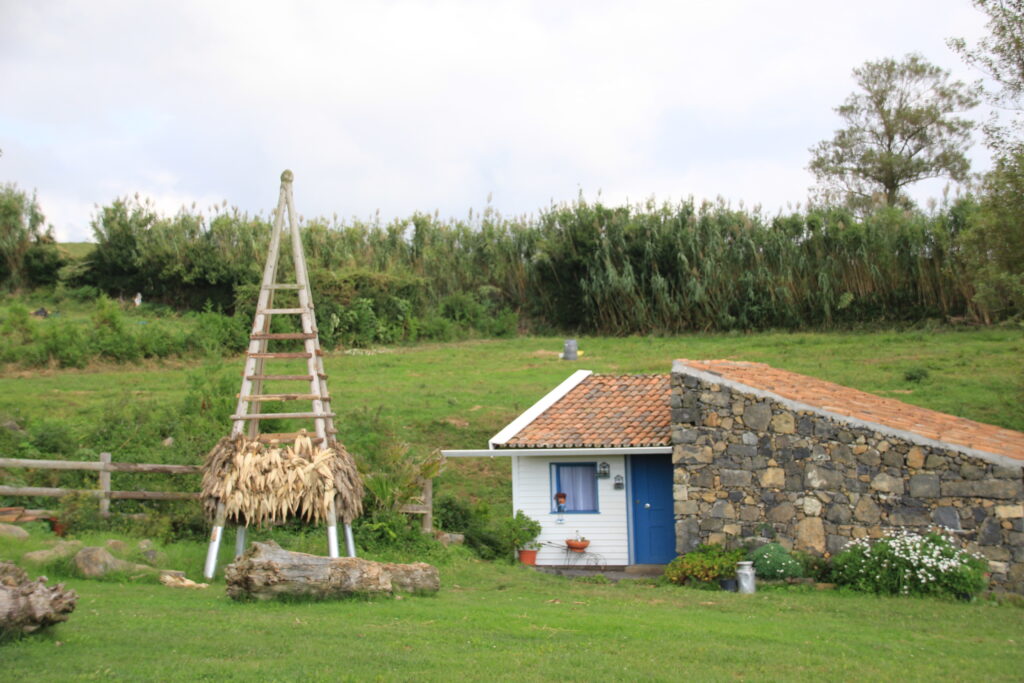
Upon entering the house, we can contemplate a typical Azorean house from the times of yore. Without electricity, without piped water, with a wood oven, double bed with a mattress stuffed with corn leaf, attic for the children to sleep with a mattress on the floor (called “camas de alastro”), several everyday utensils (sertãs, bowls, pots to put the meat in lard and salt for preservation, among others) and also several images with saints, which clearly demonstrate the devotion of the Azorean people, especially the veneration to Senhor Santo Cristo dos Milagres.
