
The 1957 eruption of the Capelinhos Volcano was a very important event in the Azorean history, having initiated one of the largest waves of Azorean emigration. See the step by step birth of one of the most emblematic and important landscapes of the Azores.
On the morning of September 27, 1957 the coastal sea of the parish of Capelo began to boil. This phenomenon did not come without “warning”, because during the past 12 days anomalies in the frequency and intensity of seismic activity had been recorded. The evolution of the situation was marked by the emission of water vapor jets and eventually ash.

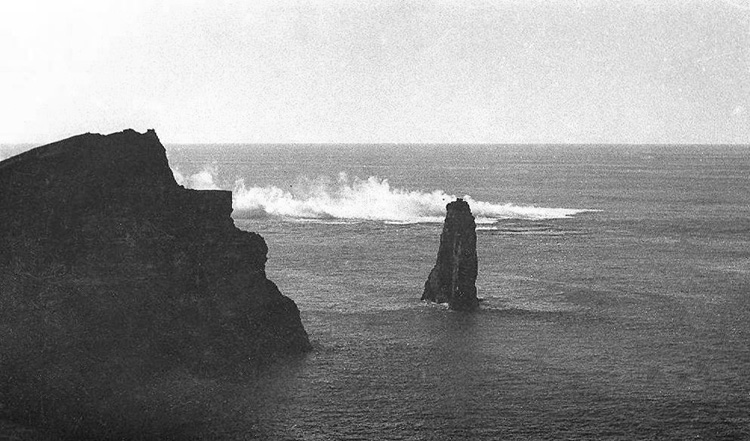
This continued activity resulted in the accumulation of the materials expelled in the volcanic chimney, causing the appearance of a small islet.


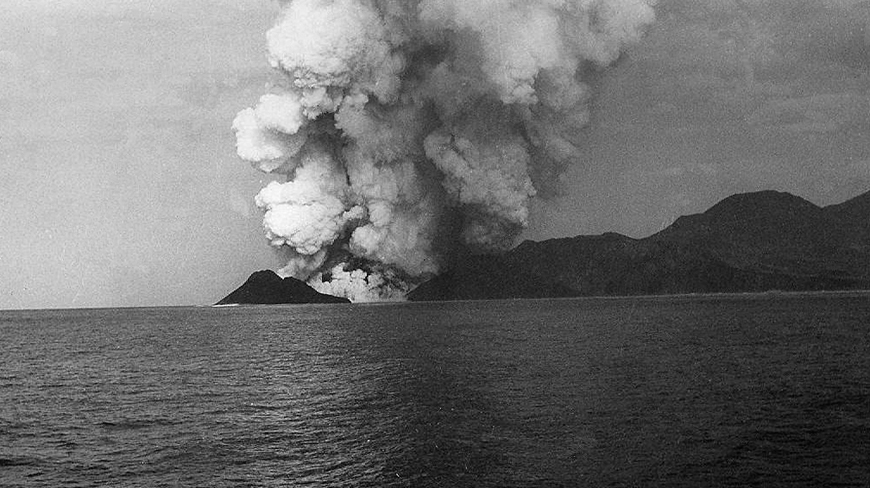
Thus, the amount of ash emitted increased, resulting in the destruction of the agropastoral activity in the area. This was a difficult period for the Faial population. The houses in the surroundings suffered severe damage due to the earthquakes. Those that escaped the reach of the earthquakes, found themselves covered in black ashes, which painted not only the roofs and walls of the houses, but also the fields where the food that served as sustenance for the families was grown.


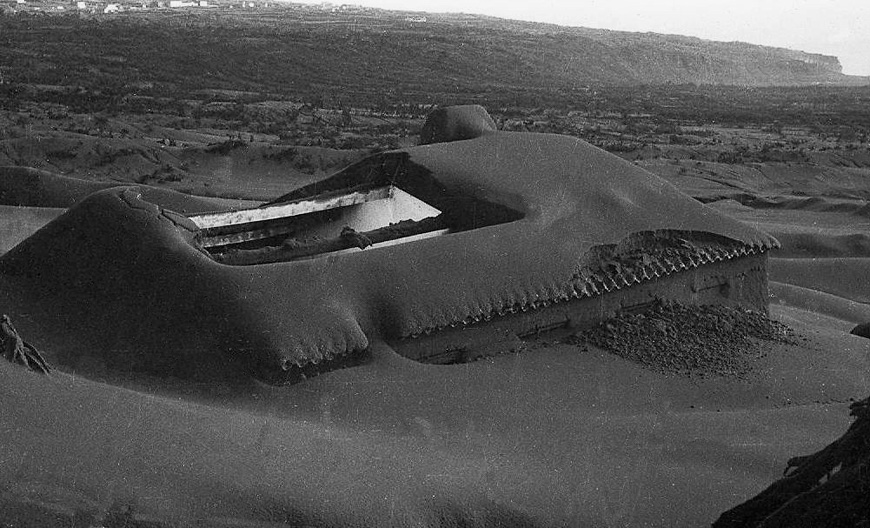
As a consequence, many people found themselves homeless. Faced with this situation, the “Azorean Refugee Act of 1958” was proposed in the United States of America, aimed to facilitate the emigration of Azoreans to that country. Also known as the “Pastore-Kennedy Act of 1958”, this legislation was proposed by John O. Pastore and later passed by the then Senator and future President of the United States of America, John F. Kennedy.
Given this, one of the largest waves of Azorean emigration to the United States took place, which strengthened the Portuguese communities already living there.
Today, the landscape is marked by Ponta dos Capelinhos, a land extension of about 2.4km2 . Being a very young landscape, it is of great interest to scientists from various fields, because its study can reveal much detailed information about volcanoes and their processes, as well as the functioning of the planet.

Photographs: SIARAM/ Espólio do T. C. José Agostinho/Museu de Angra do Heroísmo (http://siaram.azores.gov.pt/vulcanismo/vulcao-capelinhos/erupcao/1.html) |